
The product, technical and delivery details that make marine spare parts quotations clearer.
Why a Complete Request Gets a Better Answer
Marine spare parts enquiries often begin with limited information. A buyer may have a product name from a vessel report, an old photo from the engine room, a line item from a purchasing list or a code copied from a previous order. Each detail is useful, but it rarely tells the whole story by itself.
A complete request reduces unnecessary back-and-forth, helps the supplier identify the right product range and gives the quotation team enough commercial context to judge availability, packing and delivery options. This is especially important when the vessel schedule is tight or when several spare parts need to be consolidated into one shipment.
Clearest Product Detail
Product name, part number, IMPA code, model, maker or equipment name gives the request its first direction. In spreadsheet enquiries, original line numbers and separate descriptions keep every item traceable during identification.
When the item identity is uncertain, describe the shipboard system where the part is installed. For example, a pump seal for cooling water, a valve for fuel oil service or a sensor from an oily water separator will be handled differently from a generic item with the same appearance.
Add Equipment and Vessel Context
Brand, model, serial number, pressure, voltage, connection size, material and operating medium can all affect matching. The more technical context you can provide, the easier it is to avoid quoting a visually similar but unsuitable item.
For ship repair and dry-docking work, vessel location, yard, port, ETA and delivery window are part of the quotation reality. A technically correct quotation is not useful if the delivery route cannot meet the maintenance schedule.
Attach Photos and Documents Early
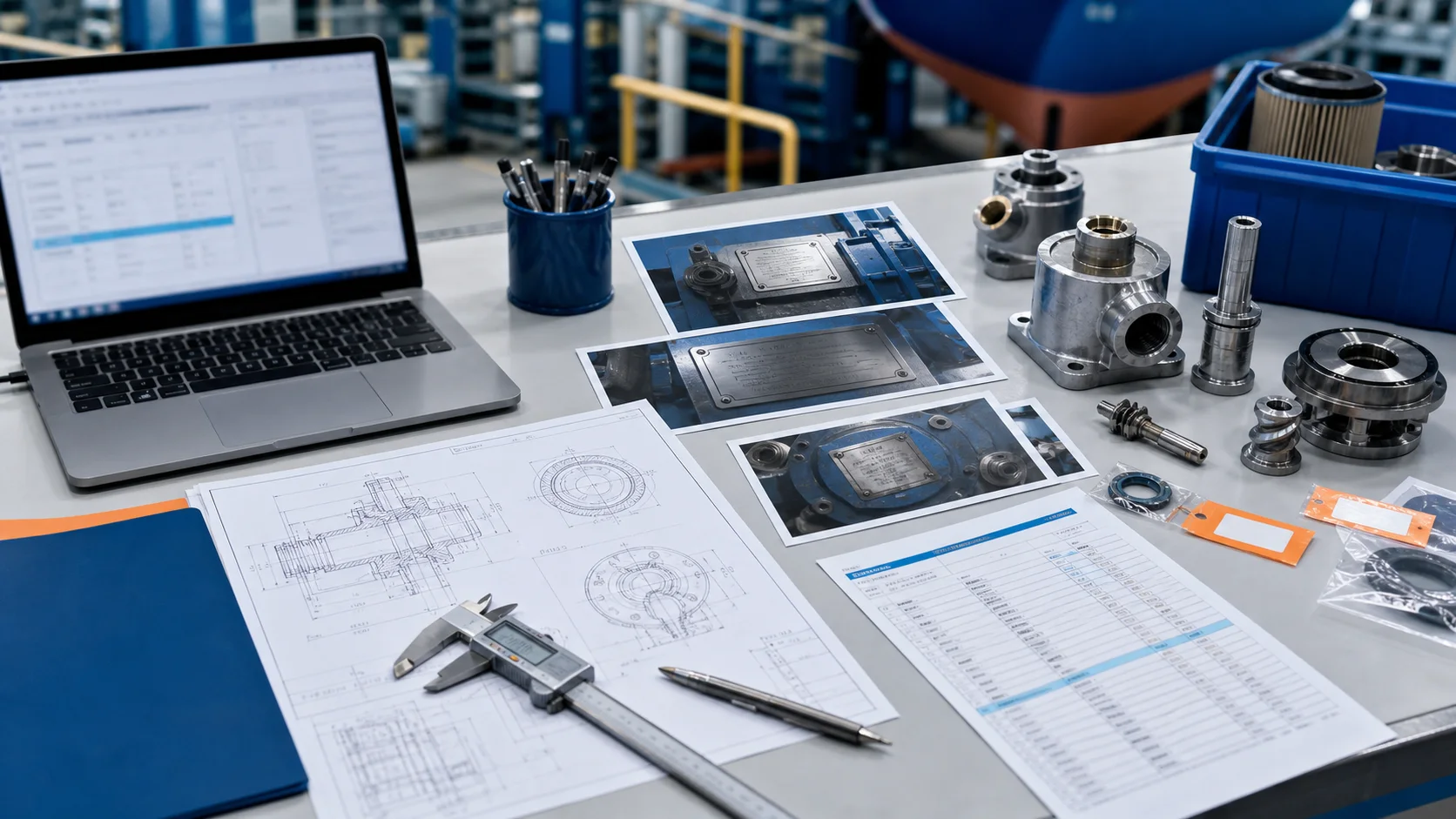
Good photos can shorten the discussion process. A wide equipment photo, a close nameplate photo and a removed-part photo often answer different questions. Original manual pages or drawings are stronger than cropped screenshots.
Avoid cropping out surrounding details. Terminal labels, arrow directions, pipe connections, mounting holes and old packing labels may help the supplier understand the part family.
Clarify Acceptable Supply Options
The project policy on genuine, OEM or replacement parts helps the supplier choose the right quotation route without guessing the buyer's position.
If the owner or superintendent has restrictions, mention them in the first message. If alternatives may be considered for non-critical items, say so clearly and ask the supplier to separate options in the quotation.
Include Commercial and Logistics Details
Quantity, destination country or port, required date, preferred incoterm and packing requirements are not secondary details. They influence lead time, quotation validity, freight planning and whether mixed items can be consolidated.
For urgent orders, separating critical items from items that can follow later gives the supplier room to quote the fastest practical route for the parts that matter most.
What Makes a Supplier Reply More Reliable
For Marine Spare Parts RFQ Essentials, the supplier compares the product identity, application context, available photos and commercial requirements together. A quotation is stronger when these details point to the same product range.
If information is incomplete, the conversation may continue with clarification questions. This is part of responsible sourcing, especially for marine equipment with long service history.
How Buyers Can Compare Replies
Compare whether each reply answers the same technical request. Check description, quantity, supply option, lead time, packing and delivery route before comparing price.
If an offer includes an alternative, ask the supplier to explain the matching basis and keep it separate from genuine or OEM options.
Keep the Quotation Record Useful
Save the final quotation, photos, corrected model information and communication notes in one place. These records shorten the next enquiry and reduce unnecessary back-and-forth.
For recurring vessel maintenance, a clean quotation history can become a practical reference library for the procurement team.
When the Request Is Ready for Sourcing Support
If some details are still missing, send the best available details instead of waiting for a perfect file. A clear note about what is unknown helps the technical team focus its follow-up questions and keeps the sourcing process moving.
Procurement Points
- Original line numbers in request lists
- Product identity and application context together
- Nameplate, equipment and old part photos
- Genuine, OEM or replacement preference
- Destination and deadline in the first message
Where Requests Often Slow Down
- Sending only a product nickname without model information
- Cropping nameplate photos too tightly
- Mixing critical and non-critical items without priority
- Leaving destination and delivery deadline until after quotation
- Requesting genuine parts while also expecting replacement lead times
Details That Help Quotation Work
- Product name
- Brand or maker
- Model
- Part No. or IMPA code
- Quantity
- Vessel system
- Nameplate photo
- Old part photo
- Destination port
- Required date
- Supply preference
SIBAOTE Perspective
A clear RFQ does not need to be perfect. It needs to preserve the best available details so the supplier can understand the request without rebuilding the case from the beginning.
SIBAOTE Sourcing Support
Related product names, brands, models, part numbers, quantities, delivery destinations and supporting files give the team a practical basis for sourcing review.