
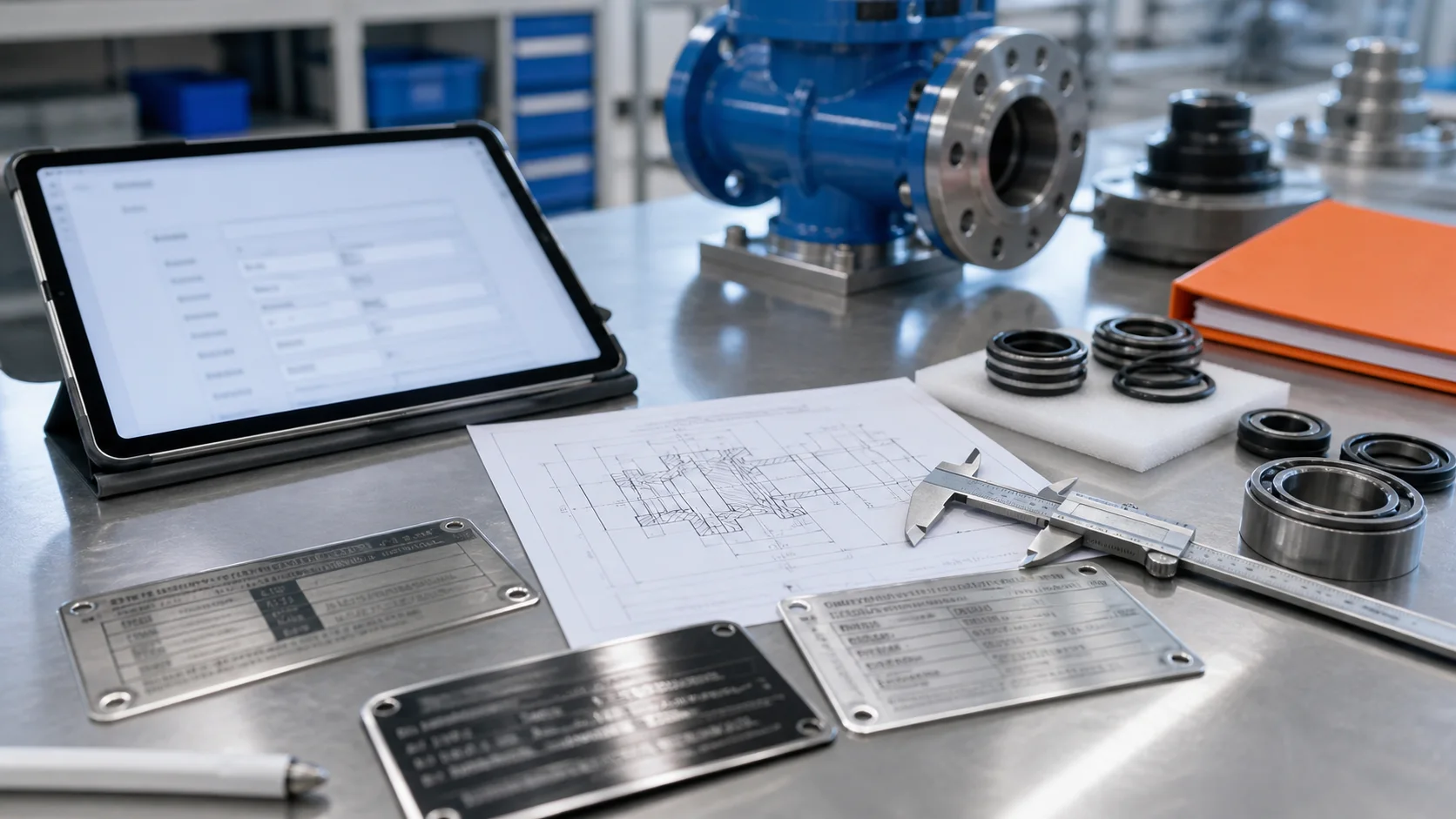
Useful maker, model and rated-data information when the part number is missing but the equipment plate is visible.
Why Nameplates Are Valuable
A nameplate is often the strongest detail when a spare part has no visible number. It can connect the request to the original equipment maker, model series, serial number, rated capacity, voltage, pressure or production batch.
For marine equipment, a nameplate also helps distinguish similar units installed in different systems. Two pumps may look similar from a distance, but the nameplate can show different material, duty point or motor data.
Effective Photo Set
One wide photo of the complete equipment, one clear nameplate photo and one close photo of the requested part give the technical team both installation context and technical data.
Enough light, reduced glare and a camera angle parallel to the plate make the data easier to read. Reflective or dirty plates usually benefit from several angles.
Nameplate Details That Matter
Maker, model, type, serial number, capacity, speed, pressure, voltage, current, frequency, material and year can all be useful. Small fields can help narrow the product series.
Photos are usually safer than memory-based transcription, because small typing errors can change the part route.
Show the Installed Position
The same brand and model can be used in different shipboard systems. A photo showing piping, cable entry, motor coupling, skid position or nearby equipment gives useful application context.
If the equipment is part of a larger skid or package, include the package nameplate as well. Package makers sometimes use their own item numbers, and these can help connect the request to manuals or previous supply records.
When the Plate Is Damaged
If the nameplate is missing or unreadable, send alternative details: old packing labels, manual pages, drawing numbers, previous invoice descriptions, stamped markings, casting numbers and photos of the installed unit.
A missing plate does not stop the RFQ, but it changes the discussion method. The supplier may need more dimensions, photos and application information before offering a reliable route.
How SIBAOTE Identifies the Right Item
For Nameplate-based Part Identification, the supplier usually compares the buyer's details with product ranges, equipment series, common spare part groups and previous RFQ patterns. A single photo may start the discussion, but model data and application context make the conclusion stronger.
the discussion may move between product category, brand reference, old part markings and shipboard system. This is normal because marine equipment is often maintained for many years and documentation can be incomplete.
Faster Answers When Details Are Missing
If the supplier asks for another angle, a dimension or a wider photo, the request is usually meant to reduce mismatch risk. Reply with the original context attached so the new information does not become separated from the RFQ.
When a dimension is requested, show the measuring method if possible. A photo with caliper position or a simple note about outside diameter, hole distance or thread type can be more useful than an isolated number.
Keep a Clearer Record for Future Orders
After the item is identified, save the final description, photos, model reference and quoted part route. The next RFQ for the same vessel will be faster if the buyer can reuse confirmed information.
This is especially useful for older equipment, repeated maintenance kits and parts that crew members describe with different names across different reports.
When the Request Is Ready for Sourcing Support
If some details are still missing, send the best available details instead of waiting for a perfect file. A clear note about what is unknown helps the technical team focus its follow-up questions and keeps the sourcing process moving.
Procurement Points
- Send wide, nameplate and part photos together
- Avoid glare and cropped photos
- Include package nameplates when available
- Keep original manual pages attached
- Use old labels and markings if the plate is damaged
Where Requests Often Slow Down
- Sending only a close-up that hides the equipment
- Typing plate data without attaching the photo
- Ignoring serial number or rated data
- Removing the old part before taking installed photos
Details That Help Quotation Work
- Maker
- Model
- Type
- Serial number
- Rated data
- System location
- Installed unit photo
- Requested part photo
- Manual page
- Old packing label
SIBAOTE Perspective
A clear nameplate photo often turns an uncertain request into a clear quotation conversation. Treat it as a technical detail, not just an attachment.
SIBAOTE Sourcing Support
Related product names, brands, models, part numbers, quantities, delivery destinations and supporting files give the team a practical basis for sourcing review.